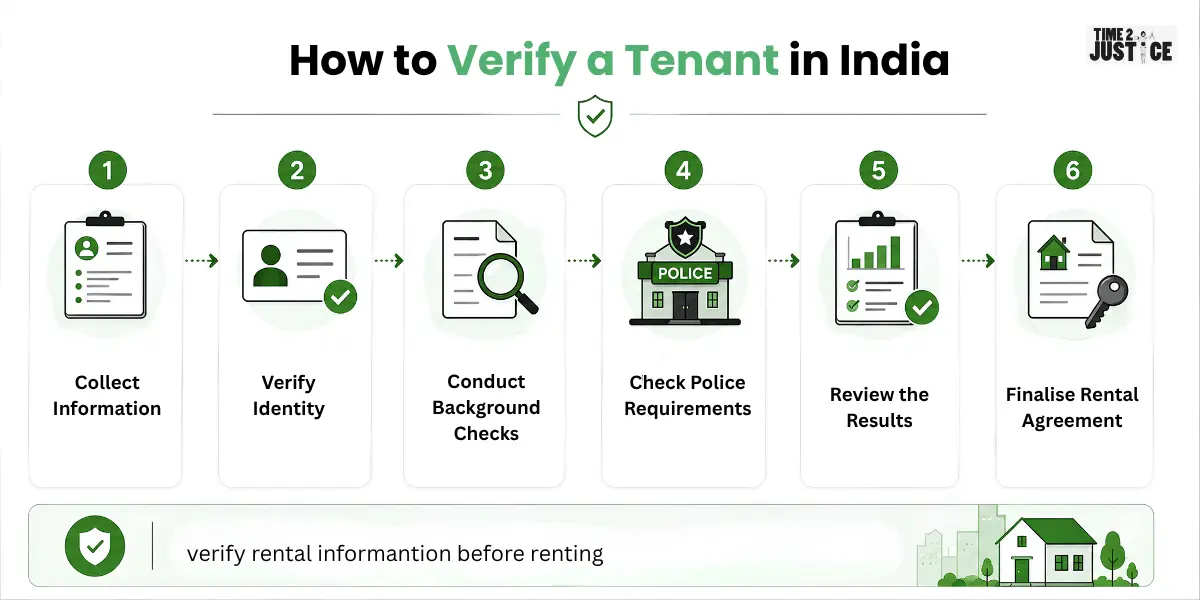
Landlords can follow a simple process before finalising a rental arrangement.
Step 1: Collect Basic Information
Collect the information reasonably required for the rental process, such as identity details, contact information, employment information, and references.
Step 2: Verify Identity
Check whether important information is consistent across the documents and details provided by the prospective tenant.
Step 3: Conduct Relevant Background Checks
Depending on your requirements, consider identity, address, credit-related, employment, and available court-case checks.
Step 4: Complete Local Police Requirements
Check whether your local police authority requires tenant verification or submission of tenant information and follow the applicable procedure.
Step 5: Review the Results
If a report contains a discrepancy or potentially adverse information, do not immediately assume that it is accurate or that the tenant has done something wrong. Verify the information and allow the tenant an appropriate opportunity to clarify it.
Step 6: Finalise the Rental Agreement
Once you have completed your due diligence, prepare an appropriate rental agreement covering rent, deposit, duration, maintenance, notice period, and permitted use of the property.
How to Verify a Tenant in India Using Time2Justice
Time2Justice helps landlords check important information about a prospective tenant through digital identity and background verification services. Depending on the service you choose, the check may include identity, address, credit-related information, court cases, and work details.
Here is how the process works:
Step 1: Visit Time2Justice
Go to the Time2Justice ID Verification page.
Step 2: Select Individual Verification
Choose the Individual option to verify a prospective tenant.
Step 3: Choose the Service You Need
Select the service based on the type of information you want to check. The checks available may differ depending on the service you choose.
Step 4: Enter the Required Details
Enter the tenant's details asked for on the platform.
Step 5: Check the Verification Report
After the verification is completed, review the information in the report. If you find any mismatch or other concern, check the information carefully and ask the tenant for clarification if needed.
A verification report can help you make a more informed rental decision, but it should not be the only factor you consider before renting out your property.
Note: Make sure personal information is collected and handled properly according to applicable privacy and data-protection rules
Red Flags to Look for During Tenant Verification
A background check should be used as a decision-support tool rather than an automatic pass-or-fail system.
| Finding | What to Do |
|---|
| Identity information mismatch | Recheck the documents and details |
| Inconsistent address information | Ask the tenant for clarification |
| Adverse credit information | Consider the overall financial situation |
| Relevant pending court case | Review its nature and current status |
| Potentially serious legal record | Verify the information carefully |
| Inconsistent employment details | Request clarification |
| Unverifiable references | Ask for alternative references |
A potential red flag is not automatically proof of wrongdoing. Information should be verified and considered in context.
Important: Landlords should use verified information responsibly and avoid making decisions based on assumptions or incomplete information.
Legal and Privacy Considerations
Tenant verification involves personal information, so landlords should handle the process responsibly.
Use an Appropriate Lawful Basis
Before collecting or processing personal information, landlords should identify the appropriate lawful basis under applicable data-protection requirements. Where consent is relied upon, it should be obtained appropriately.
Collect Only Necessary Information
Collect only the information reasonably required for the intended verification or rental purpose.
Protect Personal Information
Identity documents, financial information, employment details, and verification reports should be stored securely and shared only when necessary and legally permitted.
Follow Local Rental Requirements
Rental rules can differ between states and cities. Landlords should check applicable requirements relating to rental agreements, registration, police verification, deposits, notices, and tenant rights.
The Model Tenancy Act, 2021 provides a model framework that was shared with States and Union Territories for adoption through their respective laws. Therefore, landlords should check the rules applicable in their own jurisdiction.
For more information about another type of screening, see our guide to Criminal Background Checks in India.
Tenant Verification Checklist for Landlords
Before handing over your property, consider the following:
- Collect the required identity documents.
- Check that important information is consistent.
- Establish the appropriate lawful basis for verification.
- Conduct relevant background checks.
- Verify address information where appropriate.
- Review available court-case information.
- Consider relevant financial information where lawfully available.
- Check employment or work information where appropriate.
- Check references from previous landlords.
- Complete police verification if required locally.
- Discuss significant discrepancies with the prospective tenant.
- Execute an appropriate rental agreement.
- Store personal and verification information securely.
Conclusion
Tenant verification can help landlords make a better-informed decision before renting out their property. Checking important details such as identity, address, and relevant background information can help identify possible concerns early.
A background check is not a guarantee against future problems, so landlords should also use a proper rental agreement and follow local requirements. Time2Justice provides digital identity and background verification services that can make this process easier.
Verify the right information. Rent with greater confidence.
Frequently Asked Questions
Is tenant verification mandatory in India?
Tenant verification rules vary by state, city, and local authority. Some areas may require landlords to submit tenant details to the police.
How do I verify my tenant?
You can verify a tenant by checking their identity, address, references, and other relevant details. A background check can provide additional information.
How do I fill a tenant verification form online?
The process depends on your local police authority. Usually, you need to enter the landlord's and tenant's details and upload the required documents.
What is the process for tenant police verification in India?
The process varies by location. Generally, tenant details and documents are submitted through the local police portal or police station for verification.
How long does tenant verification take?
The time depends on the type of check. Digital checks can be quick, while police or physical verification may take longer.
Is police verification necessary for tenants?
It depends on the rules in your city or state. Check with your local police authority to see whether tenant verification is required.
Disclaimer
This article is for general information only and is not legal advice. Tenant verification, police verification, rental laws, and privacy requirements may vary by state, city and situation. Always check the latest local requirements and seek professional legal advice when needed.
Background verification results should be reviewed carefully and should not be treated as a final judgment about a person.